
Freehold and Leasehold Titles Explained
Written by Editorial Team · Last reviewed
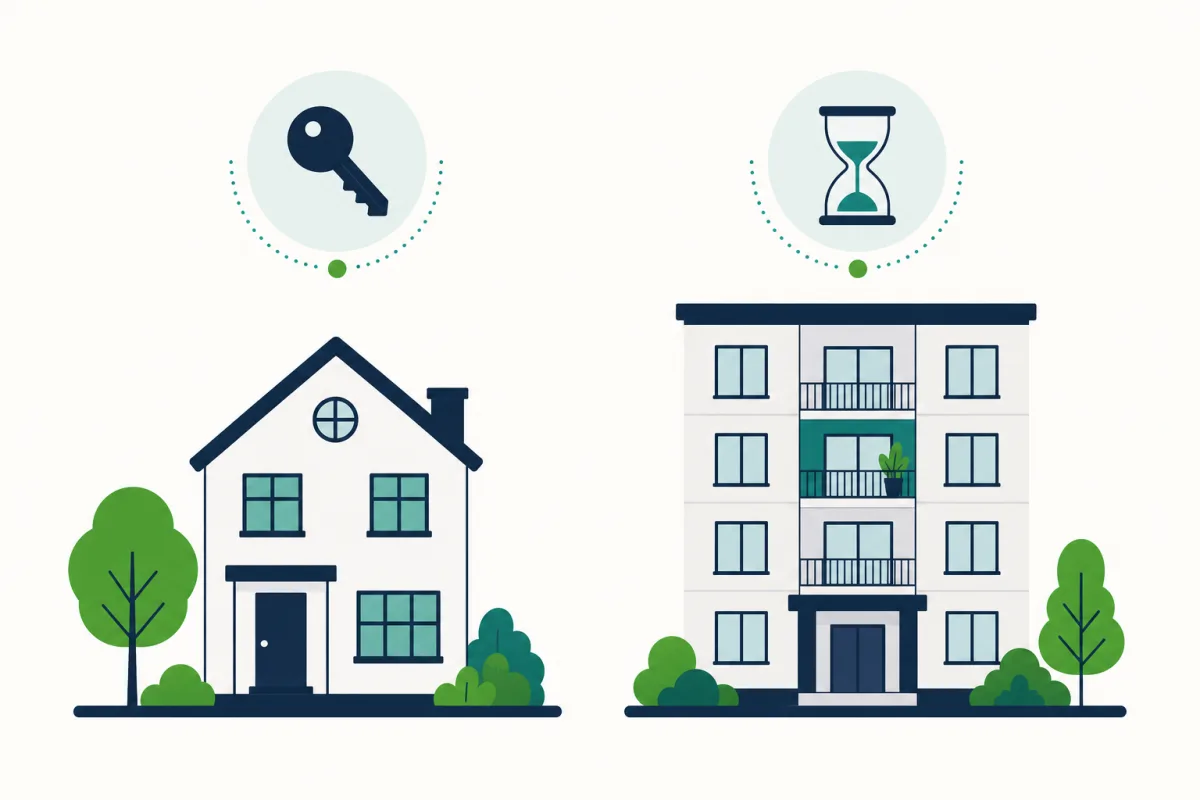
Freehold means you own the property and the land it stands on outright; leasehold means you own the property for a fixed term under a lease granted by the freeholder. The title register records the tenure of each registered title, so ordering the register is the usual way to confirm whether a property is freehold or leasehold.
Two ways of owning property
In England and Wales, most property is held in one of two ways. Freehold is ownership of the land itself, for an unlimited time. If you own a freehold house, you own the building, the ground beneath it and — subject to any rights or covenants on the title — everything that comes with it.
Leasehold is ownership for a fixed term. A lease is a contract granted by the freeholder (the landlord) giving the leaseholder the right to the property for a set number of years — commonly 99, 125 or 999 when first granted. The leaseholder owns the lease, not the land; when the term runs out, ownership reverts to the freeholder unless the lease has been extended.
The distinction matters in practice. Leasehold ownership usually comes with ground rent or service charge obligations, rules set out in the lease, and a remaining term that affects the property's value and mortgageability.
How tenure appears in the title register
Every registered title records its tenure, so the title register is the straightforward way to confirm how a property is held.
| What you order | What the register shows | | --- | --- | | Freehold title register | Opens with wording identifying the title as freehold, then describes the land by reference to the title plan | | Leasehold title register | Opens with wording identifying the title as leasehold, and gives short particulars of the lease — its date, term and parties |
For a leasehold title, the property register effectively points you to the lease itself. The register summarises the lease; it does not reproduce it. The lease is a separate document, often held by HM Land Registry as a filed document, and a copy can sometimes be ordered separately.
Flats: one building, several titles
A block of flats is the classic example of freehold and leasehold working together. The building and the land it stands on are held on a single freehold title, usually owned by a landlord, an investment company or a residents' management company. Each flat is then held on its own leasehold title, created when the lease for that flat was granted.
That means one postal address — the block — can be covered by many registered titles, each with its own title number, register and plan. When you order documents for a flat, it is worth being clear about which title you want, because the two answer different questions.
A brief word on commonhold
Commonhold is a form of freehold ownership designed for flats: each unit is owned freehold, and a commonhold association owned by the unit-holders owns the structure and common parts. It has existed in England and Wales since 2004 but has been used for very few developments, so in practice almost all flats you encounter will be leasehold.
Which title should you order?
Use this as a quick guide:
- Who owns a house, and is it freehold? Order the register for the house. For most houses there is a single freehold title.
- Who owns a flat? Order the leasehold register for the flat. It names the registered leaseholder and summarises the lease.
- Who owns the building a flat sits in, or who is the freeholder? Order the freehold register for the building or the land.
- What are the lease terms — ground rent, repair obligations, rules? Start with the leasehold register, which identifies the lease; a copy of the lease itself may then be orderable as a filed document.
- Is there a mortgage, covenant or restriction? Order the register for the specific title you are interested in — entries sit on the title they affect, so a charge on the freehold will not appear on a flat's leasehold register.
Getting a copy of the register
You can order the title register through our service: give us the address, tell us what you are trying to find out, and we check the titles by hand — including flagging where separate freehold and leasehold titles exist, and contacting you before ordering if it is unclear which one you need. You can also buy directly from HM Land Registry, which usually costs less; our fee covers the human checking, retrieval, secure delivery and support.
This article is general information about how tenure is recorded, not legal advice. If a decision hangs on the terms of a lease or the effect of an entry, a solicitor or licensed conveyancer can advise on your specific situation.
Freehold and Leasehold Titles Explained — FAQs
How do I check whether a property is freehold or leasehold?
Order the title register. The tenure is stated in the register itself — the property register section normally opens with wording that identifies the title as freehold or leasehold. For a leasehold title it also gives short particulars of the lease.
If I buy a flat, do I own the building too?
Usually not. A flat is normally held on a leasehold title, while the building and the land it stands on are held on a separate freehold title, often owned by a landlord or a residents' management company. Each title has its own register.
What is commonhold?
Commonhold is a form of freehold ownership designed for flats, where each unit is owned freehold and a commonhold association owns the common parts. It exists in law in England and Wales but has been used for very few developments, so most flats remain leasehold.
Does the register show how many years are left on a lease?
The leasehold register normally records the date of the lease and the term originally granted, so you can work out the remaining term from those details. It does not display a live countdown, and any lease extension should itself appear as a registered entry.
Can one address have both a freehold and a leasehold title?
Yes, and it is common. A block of flats typically has one freehold title for the building and a separate leasehold title for each flat. Even a house can have both where a long lease was granted and the freehold is owned by someone else.
Sources
This guide is general information, not legal advice. Spotted an error? Email support@landregistry-docs.co.uk.